
How to Run a PPC Competitor Analysis: A 5-Step SOP
- Marketing Tips, Pay-Per-Click
- Digital Marketing, PPC
- October 1, 2026
A good PPC competitor analysis lets you see exactly what your competitors are doing with their ad spend: what they’re bidding on, what their ads say, where they’re sending clicks, and whether any of it seems to be working.
Most guides treat this like a scavenger hunt. Search for a few competitor keywords, screenshot some ads, glance at a landing page, and call it a day.
That approach collects data. It doesn’t produce decisions.
A good PPC competitor analysis works more like an intelligence operation. You gather signals, document patterns, compare what competitors are doing against what you’re doing, and then decide what’s actually worth testing in your own campaigns. Competitor behavior is evidence, not instructions. You don’t know which of their tactics are working, which are failing, and which are just experiments they haven’t killed yet.
This guide treats PPC advertising competitor analysis as a repeatable SOP rather than a one-time exercise. Whether you call it a competitive PPC analysis, a PPC competitive analysis, or just “figuring out what the other side is spending money on,” the process is the same five stages.
Sections
Executive Summary
A complete PPC competitor analysis answers five questions:
- Who actually competes with you in paid search auctions? Not just your business competitors. Your real PPC competitors are the domains showing up in the same auctions, bidding on the same queries, and fighting for the same clicks.
- What keywords and channels are they targeting? Which paid keywords are they investing in, where do they overlap with your campaigns, and where are the gaps you might be missing?
- What ads, offers, and messaging are they using? What do their headlines say? What calls to action are they running? What patterns repeat across their campaigns over time?
- What happens after someone clicks? What do their landing pages look like? How well does the post-click experience match the promise the ad made?
- What should you actually change in your own campaigns? Competitor intel is only useful if you convert observations into hypotheses and hypotheses into controlled tests.
The rest of this guide walks through each stage as part of a structured PPC competitor analysis SOP, with the tools, methods, and frameworks to make each step actionable.
Treat PPC Competitor Analysis as an SOP, Not a One-Time Project
Most teams run a competitive PPC analysis once, dump their findings into a spreadsheet, and never look at it again. That’s reconnaissance without a debrief.
And if you’ve ever done it that way, you know what happens next. Three weeks later someone asks “what are our competitors doing on paid?” and you’re starting from scratch. No framework. No consistent method. Just another round of headless-chicken Googling that eats two hours and produces a slightly different set of notes than last time.
Without a documented SOP, every analysis is a fresh onboarding. It’s scattered, inconsistent, more time-consuming than it needs to be, and harder to hand off when someone else on the team needs to run it.
A structured PPC competitor analysis SOP fixes that. It turns scattered observations into a repeatable system: identify who you’re competing against, gather competitive intelligence across keywords, ads, and landing pages, benchmark your performance, and decide what to test. Same process, same structure, whether it’s you running it or someone else on the team picking it up for the first time.
The critical distinction: competitor behavior is signal, not strategy. You don’t know which of their tactics are succeeding, which are bleeding money, and which are experiments they’ll kill next month. So the goal is never to copy competitors. It’s to collect evidence, form hypotheses, and run your own tests.
Agentic AI tools are making this even more practical. Much of the data-gathering and monitoring that used to eat up hours of manual work can now be automated, freeing your team to focus on the higher-level analysis and decision-making that actually moves campaigns forward.
Run the full SOP quarterly. Check Auction Insights and major competitor changes monthly. And any time you see a sudden shift in your CPCs, impression share, or competitive positioning, that’s a trigger to pull specific sections of the analysis early.
Helpful tools to use in a PPC competitive analysis
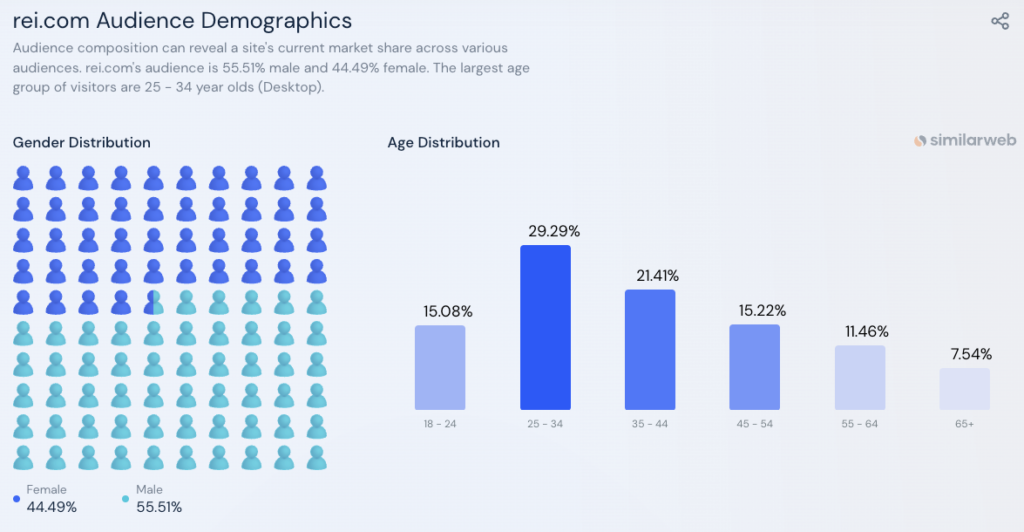
Before we get started, it will be helpful for you to have some PPC competitor analysis tools at the ready. These can include professional competitor research tools like SEMRush, Ahrefs, SpyFu, and Similar Web. Although, you may be able to glean the insights you need from free tools such as Google Ads (especially Google Ads Auction Insights).
Step 1: Identify Your True PPC Competitors
Your business competitors and your PPC competitors are not always the same companies.
A boutique hotel chain might consider other boutique hotels their main competition. But in Google Ads auctions, the domains actually bidding on the same keywords could include Expedia, Booking.com, TripAdvisor, and a regional travel agency that nobody in the C-suite has heard of. Those are your PPC competitors. They’re the ones affecting your CPCs, your impression share, and your auction dynamics.
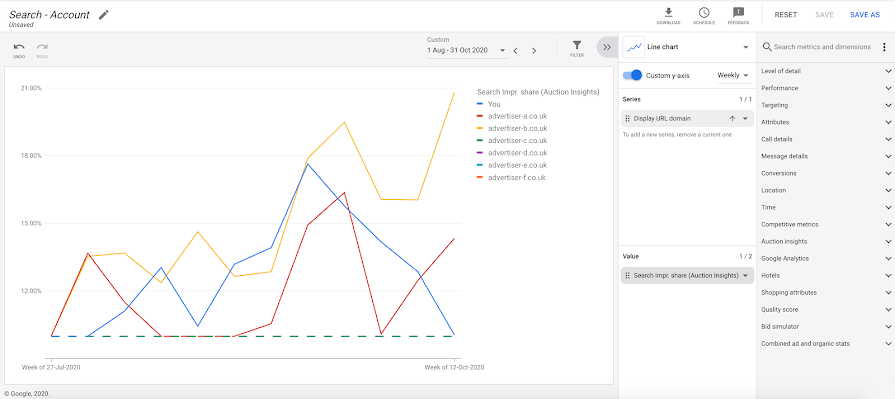
The fastest way to find them is Google Ads Auction Insights. This report shows you every domain entering the same auctions you are, along with metrics like impression share, overlap rate, outranking share, and position above rate. It’s first-party Google data, which means it reflects your actual competitive landscape rather than estimates from a third-party tool.
Start there, then layer in what tools like Semrush, SpyFu, or Ahrefs show for paid keyword overlap. You’ll often find competitors in the third-party data that don’t appear in Auction Insights because they’re bidding on queries you haven’t targeted yet. That’s useful intelligence in itself.
As you build the list, consider a few qualifying questions
Are they:
- Targeting the same audience and geographic market?
- Competing at a similar price point or service tier?
- Bidding on similar intent, or are they after a different type of buyer?
- Showing up consistently, or was it a one-time campaign?
A competitor that appears in your auctions once during a seasonal push is worth noting. A competitor that shares 40% keyword overlap and consistently outranks you on your highest-value terms is worth studying in detail.
Separate your list into two tiers: primary PPC competitors (consistent auction overlap, similar audience, direct threat) and secondary competitors (partial overlap, different segments, or newer entrants worth monitoring). This keeps the rest of the SOP focused. You’ll analyze primary competitors in depth and track secondary competitors for changes.
Step 2: Map Their Keywords, Channels, and PPC Activity
Once you know who your PPC competitors are, the next step is figuring out where they’re spending and what they’re bidding on.
Keyword intelligence is the core of this stage. Pull competitor paid keyword reports from tools like Semrush, Ahrefs, or SpyFu and look for:
- Overlap: Which keywords are you both bidding on? How do your positions and estimated CPCs compare?
- Gaps: Which paid keywords are competitors targeting that you’re not? Are any of those gaps opportunities you’ve overlooked, or keywords you’ve already tested and rejected?
- Branded vs. non-branded mix: How much of their paid traffic comes from their own brand terms versus commercial and informational queries? A competitor heavily invested in non-branded keywords is usually competing more aggressively for new customers.
- High-intent queries: Which keywords signal purchase or conversion intent? A competitor consistently bidding on “enterprise ERP implementation cost” is telling you something different than one focused on “what is ERP.”
- Historical patterns: SpyFu is particularly useful here. If a competitor has been bidding on a keyword for 18 months straight, that’s a much stronger signal than a keyword that showed up in their account last week. Sustained investment suggests the economics are working.
Channel intelligence is the other half. Keyword data tells you what they’re targeting in Search, but PPC doesn’t stop there. Look for competitor activity across:
- Google Shopping and Performance Max (where observable)
- Google Display
- YouTube
- Meta (Facebook and Instagram via the Meta Ad Library)
- LinkedIn (via the LinkedIn Ad Library, particularly for B2B)
A competitor that runs Search campaigns but ignores Shopping may be leaving money on the table. A competitor investing heavily in YouTube pre-roll ads alongside Search is signaling a full-funnel strategy. These patterns tell you about their priorities and budget allocation, not just their keywords.
Once you’ve identified promising competitor keywords worth testing, use our PPC Keyword Match Type Tool to evaluate how they could be structured inside your own Google Ads account before committing budget.
Analyze Competitor Ads, Messaging, and Offers
Now you know who your competitors are and what they’re bidding on. This step is about studying what they’re actually saying to get the click.
Google Ads Transparency Center is the best free starting point for this. It lets you look up any advertiser and see their current ads across Search, Display, and YouTube, including which regions they’re running in. It won’t show you performance data, spend, or targeting settings, but it gives you a direct look at live creative. For Meta campaigns, the Meta Ad Library does the same job across Facebook and Instagram. LinkedIn’s Ad Library covers B2B.
When reviewing competitor ads, you’re not just cataloging what exists. You’re looking for patterns. A single ad is a data point. The same headline structure, offer, or CTA showing up across multiple campaigns or running consistently over several months is a signal.
Pay attention to:
- Headlines and value propositions. What benefit do they lead with? Price? Speed? Expertise? A specific outcome?
- Calls to action. “Free consultation” and “Get a quote” target very different stages of the funnel. What friction level are they comfortable with?
- Offers and incentives. Free trials, demos, percentage discounts, guarantees, bundled pricing. Note what they’re offering and how prominently they feature it.
- Urgency and trust signals. Limited-time language, money-back guarantees, client counts, certifications, awards.
- Ad extensions and assets. Sitelinks, callouts, structured snippets, and seller ratings all tell you how much effort competitors are putting into their ad real estate.
- Repetition over time. This is the most underrated indicator. If a competitor keeps running the same offer for six months, the economics are probably working. If their messaging changes every few weeks, they’re still testing. Both are useful to know.
The goal here is not to build a swipe file you’ll never open again. It’s to identify the messaging patterns, offers, and positioning that your competitors have settled on so you can decide where your own ads need to differentiate.
3. Research each competitor’s PPC presence
At last, it’s time to dig into the nitty gritty. What’s your competitor’s PPC marketing strategy?
Which keywords are you both bidding on? Are you using the same (or different) ad formats and channels, including traditional search ads, Google Shopping, and Display?
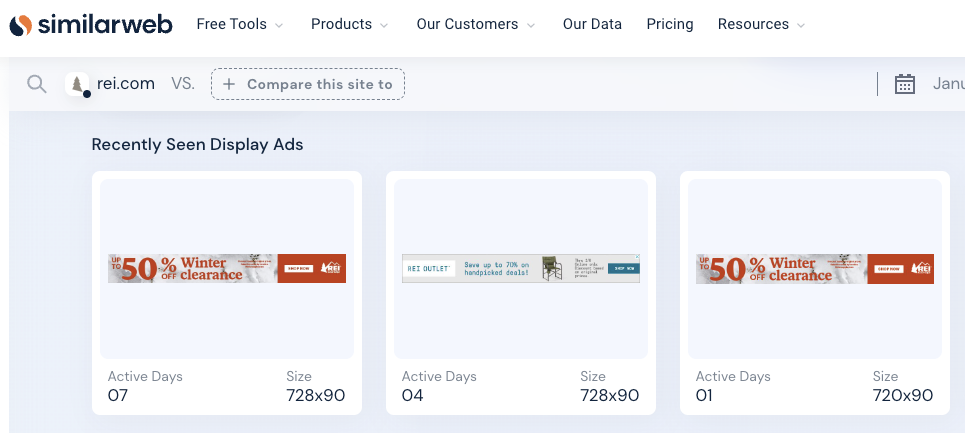
Tools like SpyFu and SimilarWeb will show you where your competitors are advertising, top keywords, and even a sneak peek at some of their latest display ads. SpyFu also reveals additional details such as ad spend and click-through rates.
Step 4: Analyze Competitor Landing Pages and Conversion Paths
Ads get the click. Landing pages get the conversion. Analyzing one without the other is like scouting a team’s offense but ignoring their playbook once they’re inside the red zone.
Start with a simple question for every competitor ad you reviewed in Step 3:
What promise did the ad make, and does the landing page deliver on it immediately?
That’s message match, and it’s one of the fastest ways to evaluate whether a competitor’s post-click experience is strong or sloppy. An ad promising “free 14-day trial” that lands on a generic homepage with no mention of a trial is a misfire. An ad promising “enterprise ERP implementation” that lands on a page built specifically around enterprise use cases with relevant social proof and a clear next step is a competitor that knows what they’re doing.
For each competitor landing page, evaluate:
- Headline and message match. Does the landing page pick up exactly where the ad left off, or does the visitor have to hunt for the thing that made them click?
- Primary CTA. What action does the competitor want the visitor to take? Demo request, free trial, phone call, add to cart, form fill? How much friction is involved?
- Page structure. Long-form pages with extensive copy signal a considered purchase. Short pages with a single CTA and minimal text suggest the competitor is going after quick conversions.
- Social proof and trust. Client logos, testimonials, case studies, review counts, certifications. What evidence do they offer that they can deliver?
- Pricing visibility. Are competitors showing pricing on the landing page or hiding it behind a form? Both are deliberate strategies.
- Mobile experience. Load a competitor’s landing page on your phone. If it’s slow, cluttered, or hard to navigate, that’s a gap you can exploit with a cleaner mobile experience of your own.
AI tools can also speed this up significantly. Feed a competitor’s landing page URL into an LLM and ask it to evaluate message match, CTA clarity, trust signals, and page structure against the ad that sent you there.
One thing most competitor analysis guides skip: don’t just look at the landing page in isolation. Click through the conversion path. Fill out the form (use a burner email if you need to). See what happens next. Do they redirect to a thank-you page? Trigger an email sequence? Retarget you within 24 hours? The post-conversion experience tells you how sophisticated their funnel actually is.
Step 5: Benchmark Performance and Turn Competitor Intel Into Tests
This is where most competitor analysis guides wave goodbye. They show you how to collect data and then leave you standing there with a spreadsheet full of observations and no idea what to do with any of it.
The final step of the SOP has two jobs: benchmark your current PPC performance against competitors, and then convert what you’ve learned into controlled experiments.
Benchmarking with Auction Insights
Google Ads Auction Insights is your primary benchmarking tool because it uses actual auction data rather than third-party estimates. For your most important campaigns, keywords, and ad groups, review:
- Impression share: How often your ads show compared to competitors. A competitor with significantly higher impression share on your priority keywords is either outbidding you or running a higher Quality Score.
- Overlap rate: How frequently a competitor’s ads appear alongside yours. High overlap means you’re fighting for the same clicks consistently.
- Outranking share: How often a competitor’s ad ranks above yours, or shows when yours doesn’t.
- Position above rate: How often a specific competitor’s ad appears in a higher position than yours when both show.
- Top of page rate and absolute top of page rate: How often competitors appear at the top of the SERP versus the very first position. Trends here tell you whether competitors are pushing harder on bid strategy or ad quality.
Track these metrics monthly at minimum. A single snapshot tells you where you stand. Tracking over time tells you whether competitors are gaining ground, losing interest, or gearing up for a seasonal push.
Turning findings into PPC experiments
Here’s where the SOP earns its name. Everything you collected in Steps 1 through 4 is raw intelligence. It becomes useful only when you convert observations into hypotheses and hypotheses into tests.
PPC Competitor Analysis Decision Matrix
| Competitor finding | Possible interpretation | What to test |
|---|---|---|
| Competitor consistently bids on a keyword you don’t target | Keyword may have commercial value for your market | Test with controlled budget and appropriate match type |
| Several competitors lead with the same benefit in their headlines | That benefit likely resonates with buyers | Test that messaging against your current headline approach |
| Competitor uses dedicated landing pages per campaign | Stronger message match may improve their conversion rate | Build and test campaign-specific landing pages |
| Competitor dominates absolute top impression share on a key term | They’re investing heavily in that auction | Review your economics before raising bids |
| Competitors consistently offer free consultations | Lower-friction CTA may be generating more leads | A/B test “free consultation” against your current CTA |
| Competitor landing pages all emphasize a feature you mention but don’t lead with | Feature may be a primary purchase driver | Test leading with that feature in both ads and landing pages |
The critical habit: never skip the middle column. Jumping straight from “competitor does X” to “we should do X” is the most common mistake in competitive PPC analysis. Competitor behavior is evidence to be interpreted, not instructions to be followed. You don’t know their conversion rates, their margins, their client retention, or whether that campaign is a month away from getting killed.
Check the economics before you act
One more filter before you commit budget to any test inspired by competitor intelligence. A competitor bidding aggressively on a keyword doesn’t mean the keyword is profitable for your business. Their margins, LTV, and cost structure may be completely different from yours.
Before increasing bids or launching into a new auction based on competitor activity, run the numbers through our ROAS Calculator to make sure the economics actually work at your cost structure and conversion rates.
What a Strong PPC Competitor Analysis Actually Gives You
Run the full analysis quarterly. Monitor Auction Insights and major competitor shifts monthly. React to sudden changes in CPCs or impression share immediately.
Your PPC competitors are not always your business competitors. The domains in your Google Ads auctions are the ones affecting your costs, your visibility, and your results.
First-party data from Auction Insights and free tools like Google Ads Transparency Center belong alongside third-party intelligence from Semrush, Ahrefs, and SpyFu. They answer different questions.
Analyze keywords, ads, and the post-click experience as separate stages. Each one reveals different competitive signals.
Patterns and repetition matter more than individual tactics. A competitor running the same offer for six months is telling you something a one-off ad never will.
Competitor behavior is evidence, not instructions. You don’t know their margins, their conversion rates, or whether that campaign is about to get killed.
Every competitive finding should pass through three filters: what did you observe, what might it mean, and what’s the experiment worth running?
Check the economics before you act. A keyword worth bidding on for a competitor with different unit economics may not be worth bidding on for you.
Run the SOP or Let Us Run It For You
A structured PPC competitor analysis doesn’t require a massive budget or a dedicated intelligence team. It requires a repeatable process, the right tools, and the discipline to convert observations into tests rather than reactions.
If you’d rather have an experienced PPC team handle the competitive intelligence and campaign optimization for you, Your Marketing People can help. Contact us to talk about your paid search strategy.







Recent Comments